
The Comic-Cubist

Category: Origin of comic cubism

  • Comic-Cubism as a concept and as a genre

    Comic-Cubism as a concept and as a genre

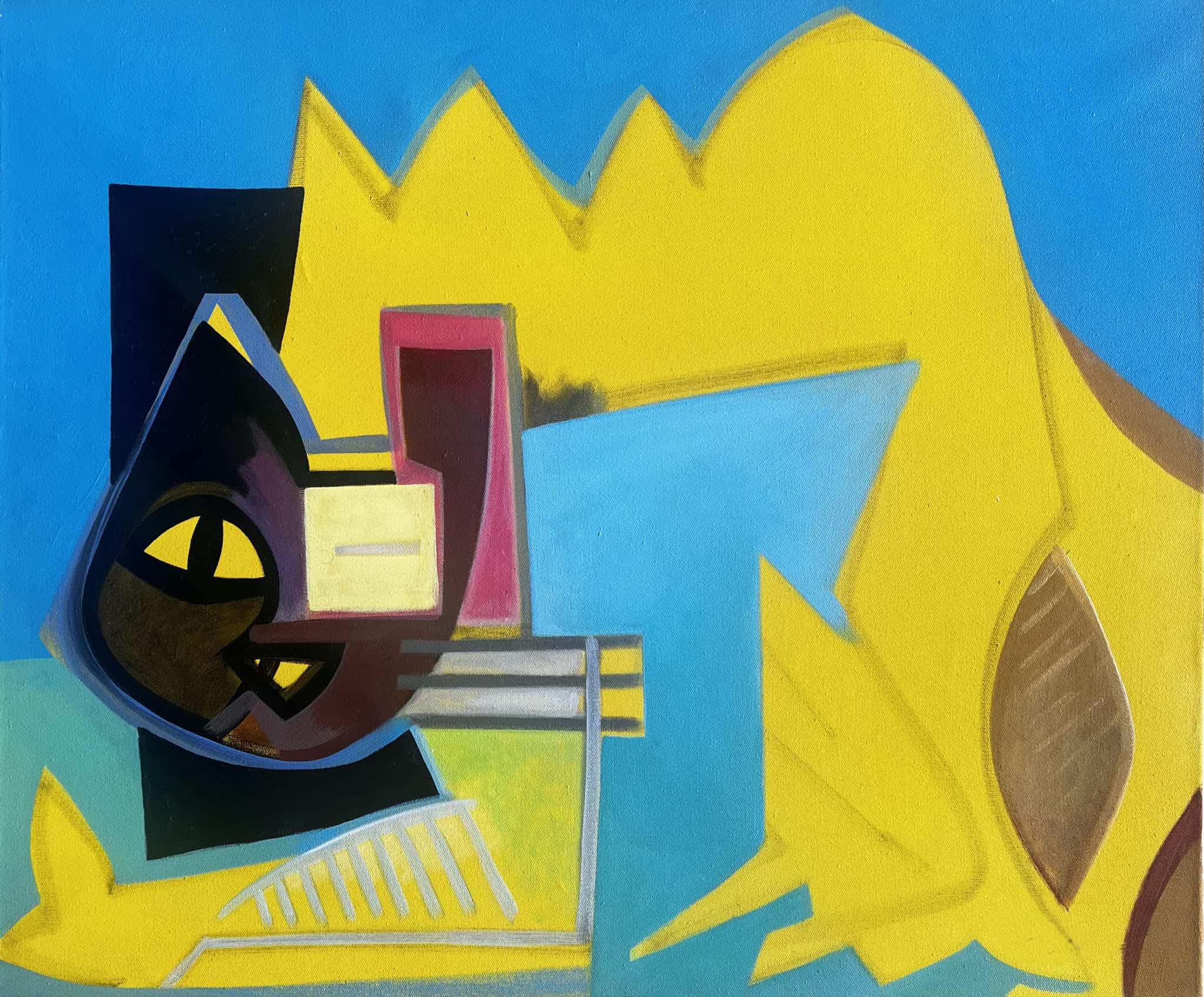
    The stylistic terms ‘comic’ and ‘cubism’ overlap in their formal approaches in ditArdo’s artistic language. The ‘comic’ is characterized by the means of line and surface, whereby the space is also defined by the surface. The striking effect is used together with synthetic ‘cubism’, the simultaneous and superimposed representation of different views or perspectives, to make high-contrast statements about the motif or experiences. The motif becomes a pictorial symbiosis of everyday experiences, dreams, lines, colors and structures. For example, the yellow tomcat stands for the image of laissez-faire, of roaming around in the midday sun.

    In the artistic observation process, questions about the fourth dimension arise primarily in sunny Jakarta. What color are the streaks of light over the water? How much time is eight months? Is time yellow, red or blue?
    These are just a few quotes from our lively email exchange in the ether.


    Text: Dr. Wolter Abele, art historian on the exhibition ‘Out of The Common’ 2005
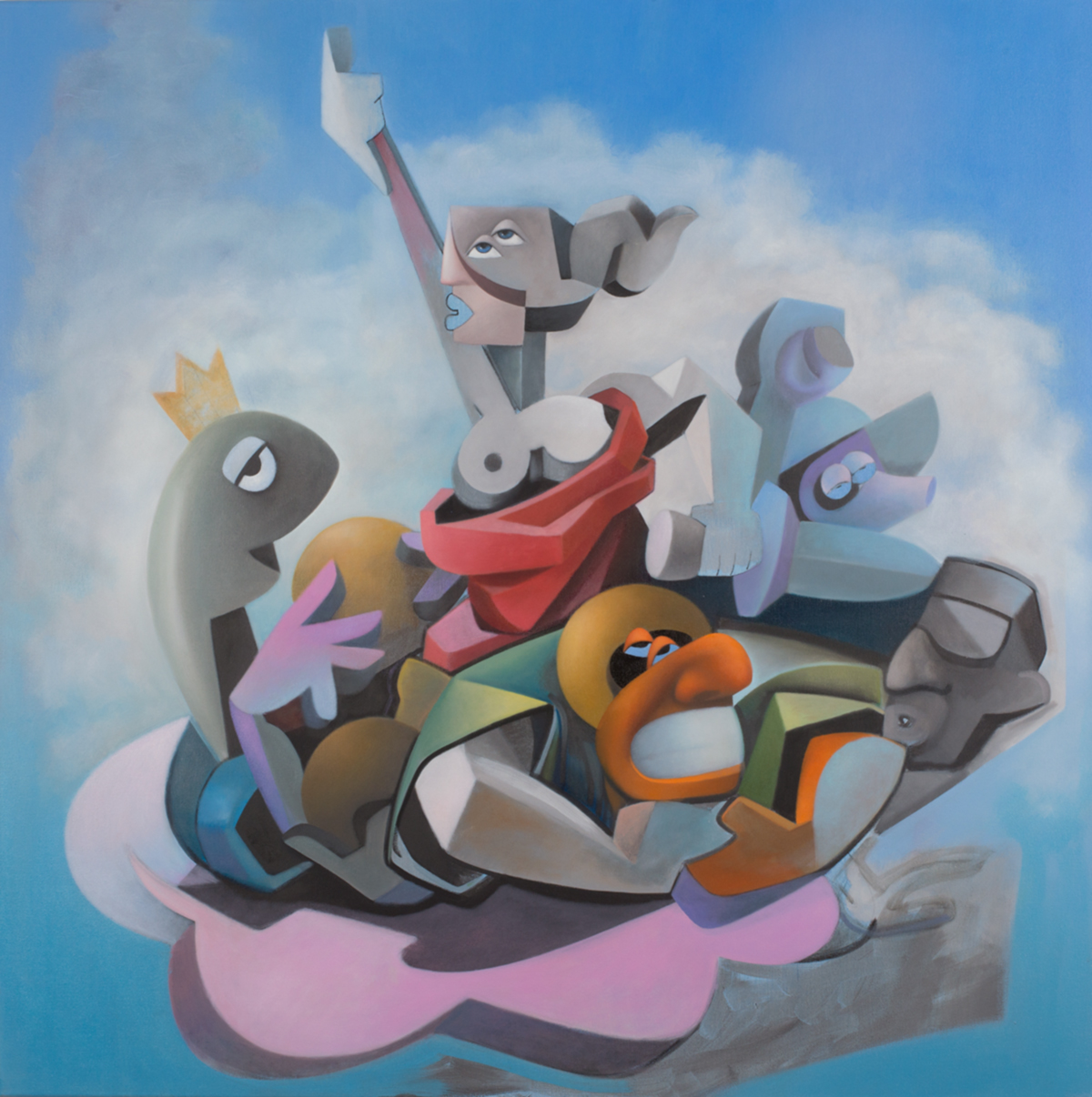
    At the beginning of the 1990s, ‘ditArdo’ developed his characteristic artistic language of ‘comic-cubism’. The term ‘comic-cubism’ was then coined by Fred Feuerbacher in 2004 in connection with ditArdo’s paintings in front of a wide audience.

  • Role models and inspiration

    Role models and inspiration

    Conversely, ‘comic-cubism’ without ‘cubism’ without Braque or Picasso would of course hardly be conceivable. Just as it would hardly have emerged without Disney, Uderzo or Charles M. Schulz. However, ‘comic cubism’ is visibly and clearly going its own way in our time. ditArdo is convinced that ‘comic-cubism’ will establish itself as a term and a genre closely related to pop art.
    Roy Schwartz, historian and critic of pop culture, has described Picasso’s influence on Cubism as follows (original source: link)

    Picasso’s revolutionary Cubism is considered the most influential art movement of the 20th century and earned him the nickname “father of modern art”. Its impact was so immense that it helped to inspire a host of other art movements around the world such as Futurism, Suprematism, Dadaism, Constructivism, Vortism, De Stijl and Art Deco.

    But Picasso was also an avid fan of American comic strips, especially “The Katzenjammer Kids”, and this influence is obvious. If Cubism was the opening shot of modern art, comics gave him something of the “Bang!”

    From an article by Roy Schwartz historian and pop culture critic
    Picasso’s Comics: How Cubism Was Influenced by an American Comic Strip
    Roy Schwartz is a pop culture historian and critic. His work has appeared in CNN.com, New York Daily News, The Forward and Philosophy Now, among others. His latest book is the Diagram Prize-winning ‘Is Superman Circumcised? The Complete Jewish History of the World’s Greatest Hero.’ Follow him on Twitter, Instagram and Facebook @RealRoySchwartz and at royschwartz.com.

    Pablo Picasso was already impressed by Rudolf Dirks and other US American comic artists, and so there has always been an art-historical link between the comic strip and ‘Cubism’, which was celebrated as revolutionary.